THE CALM AFTERNOON
For the kid who locks on and will not let go.
$3. Instant access. Written for ADHD and autistic kids.
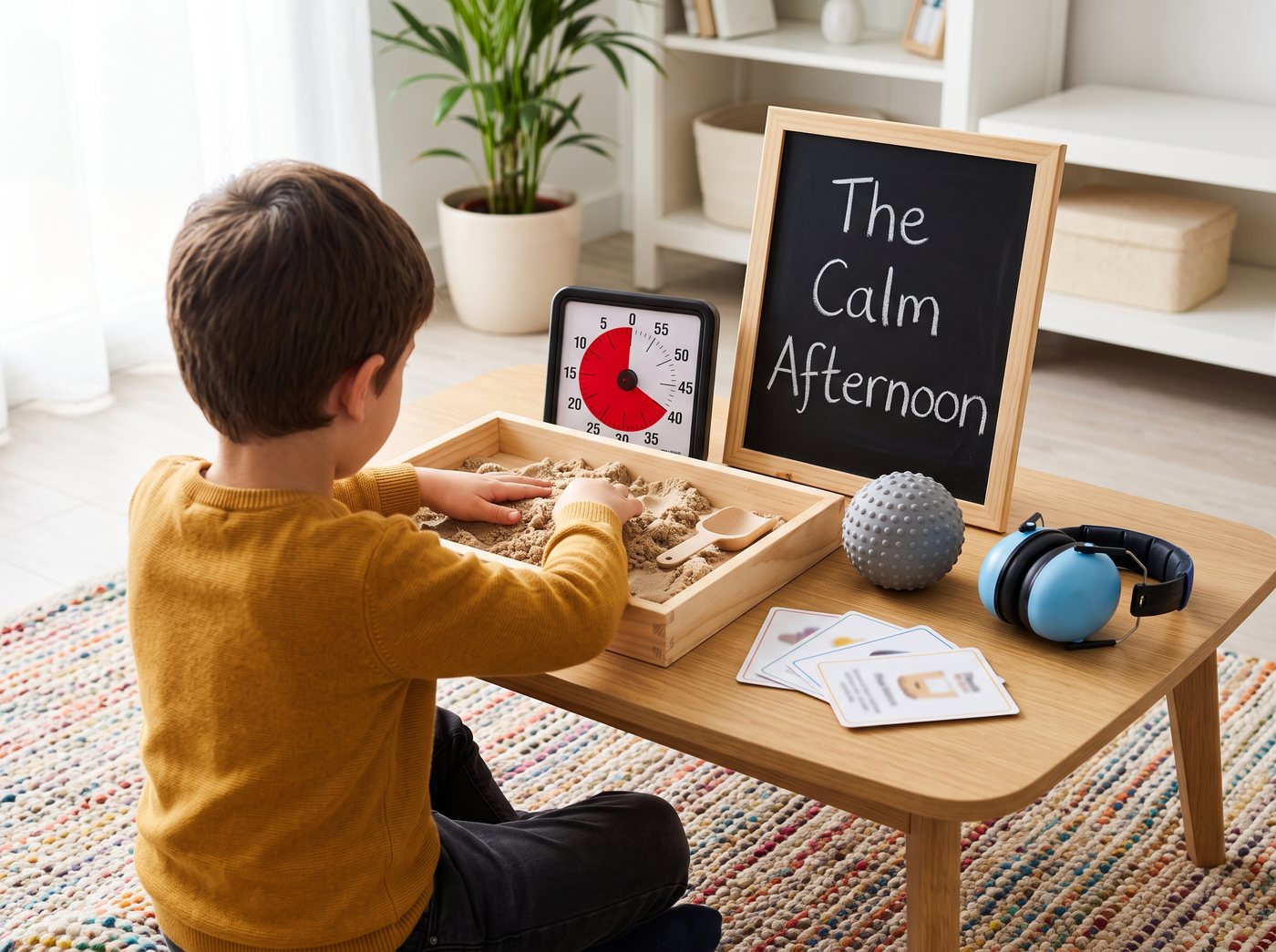
- Why "just turn it off" feels like ripping off a blanket
- Transitions that use a timer they can see, not a countdown
- Activities that work with the brain instead of against it
Here's one of them, free.
The timer change
What you need
- A visual timer, the kind where a colored wedge shrinks
- Stop saying "ten minutes." A number is an abstraction. A shrinking red wedge is a fact.
- Name the next thing before you end this thing. Not "screens off" but "screens off, then the ice tray."
- Warn earlier and more often than feels necessary. Fifteen, ten, five, two.
The scienceThe gap between activities is what causes the crash, so do not leave one open. And make the rule about the clock rather than about the kid: same stop time for everybody, announced by a timer nobody can argue with. That is the only thing that reliably ends the sibling fairness fight, because it takes you out of the negotiation entirely.
No shame, no therapy-speak, no projects that need 100 supplies.
What you get
- Why the ADHD brain locks onto screens, in one honest paragraph
- Transitions that do not end in a meltdown
- Activities sorted by wind-up or wind-down
- A section for sensory-seeking and sensory-avoiding kids
2,255 parents in our survey mentioned autism, ADHD or sensory needs. That is more than mentioned budget, mess or homeschooling. Nobody writes for you. We did.
Questions
No shame, no therapy-speak, no projects that need 100 supplies.